
To find a therapeutic riding program or facility in your area, please click here.
Upcoming Equine Event:
Equine/Donkey Sculpture class at The Taos Art School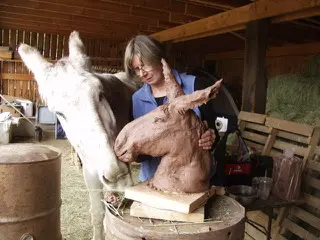
Learn to sculpt the donkey while joining with other equine lovers and meet the model, Milagro — a Mammoth Donkey.
Contact Liz McCombs to learn more.
719-459-6509
Or visit http://www.taosartschool.org/donkey_sculpture to sign up.
Hearts and Horses 2024 Gala – Meredith Hodges Interview Part 1
Part one of Meredith Hodge’s interview for the Hearts and Horses 2024 Gala. Lucky Three Ranch was a presenting sponsor for the Gala. Meredith talks about the importance of being of service.
Hearts and Horses 2024 Gala Meredith Hodges Part 1
Hearts and Horses 2024 Gala – Meredith Hodges Interview Part 2
Part two of Meredith Hodge’s interview for the Hearts and Horses 2024 Gala. Meredith thanks those who join in supporting Hearts and Horses and talks about the importance of developing the positive in people.
Hearts and Horses 2024 Gala Meredith Hodges Part 2
Hearts and Horses 2024 Gala – The Impact of Therapeutic Riding on Children With Autism
Research began in 2010 to measure the effectiveness of therapeutic riding on children with autism. The results are amazing!
Hearts and Horses 2024 Children With Autism
Hearts and Horses 2019 Gala – Thank you
Hearts and Horses built a new arena where they will continue to change lives through therapeutic riding. The new arena will be called Lucky Hearts, as much of the funding for the arena was given by Lucky Three Ranch. This is the Thank you video from the 2019 Gala.
Hearts and Horses 2019 Gala Thank You Video
Ground Breaking – Raising the Barn
Hearts and Horses broke ground on a new arena where they will continue to change lives through therapeutic riding. The new arena will be called Lucky Hearts, as much of the funding for the arena was given by Lucky Three Ranch.
Hearts and Horses Raising the Barn Fundraiser
Facts & FAQs about Therapeutic Riding
Therapeutic Riding (also known as equine-assisted activity or adaptive riding) is a form of therapy in which an equine—horse, mule, pony or donkey—is used as a partner with the human participant. In addition to the physical therapy and benefits to the rider, the mental and emotional impact is undeniable.
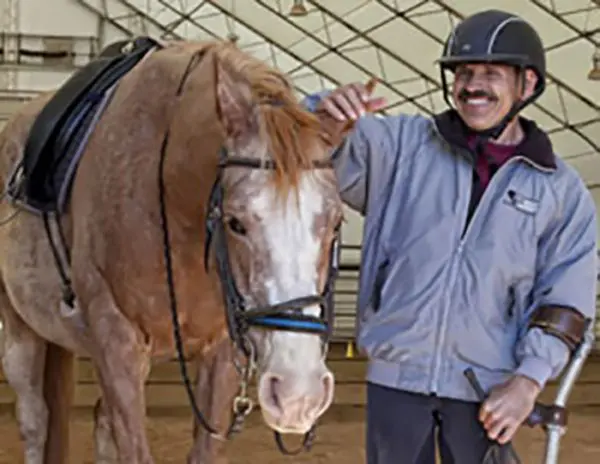
Hearts & Horses has been changing the lives of people with disabilities since 1997. We offer an array of equine assisted programs that are designed to empower participants, promote self sufficiency and encourage growth, both inside and outside of the riding arena. Learn more about each of our programs!
Video by Ryan Slattery
Watch Hearts & Horses Circle of Hope
What is Therapeutic Riding?
Therapeutic Riding creates new opportunities for physical, mental and emotional rehabilitation. The rhythmic and rocking gait of the horse transfers a gentle three-dimensional movement to the rider that relaxes muscles, improves muscle tone, flexibility and balance, and enhances spatial awareness. Outdoors with a team of encouraging volunteers and a supportive horse, self-control, self-esteem, self-confidence and independence grows. Rehabilitation becomes a joy rather than a chore.
Watch “The Science Behind the Magic”
Watch Zoie’s story.
Why I Ride – Bryce
What are the Different Types of Therapeutic Riding Treatments?
- Therapeutic Riding is an individualized program of learning to ride a horse which takes into account a person’s physical, mental, and emotional strengths and limitations.
- Hippotherapy is physical therapy that utilizes the natural movement of the horse to help riders regain physical strength, mobility, and coordination.
- Equine Facilitated Psychotherapy (EFP) is a combination of Therapeutic Riding and traditional Psychotherapy.
Hearts & Horses video about therapeutic riding.
Changing Leads at Hearts & Horses
What Types of Disabilities or Conditions is Therapeutic Riding Used to Treat?
Therapeutic Riding is a growing and widely-accepted treatment for rehabilitating a range of physical, mental, and emotional disabilities. Conditions served include: cerebral palsy, spina bifida, neuromuscular disorders, post-traumatic brain injury, autism, ADHD, and cognitive disorders. Riders experience increased self-confidence and improvement in strength, balance, coordination, attention span, language and social skills.
Hearts & Horses video about therapeutic riding for veterans.
Hearts & Horses video about therapeutic riding for veterans.
What are the Direct Benefits of Therapeutic Riding?
- Normalizes muscle strength and tone. Improves coordination, freedom of movement, balance, respiration, body awareness, tactile perception and oral motor control.
- Improves interpersonal communication. Promotes family interaction and broadens social activity. Develops a recreational skill.
- Improves physical, mental, social and emotional well-being.
- Enhances self-image and confidence. Increases acceptance of unfamiliar experiences. Develops loving relationships.
- Provides educational, recreational and vocational opportunities.
Riding in the Moment: Therapeutic Riding for Seniors
Therapy at Hearts & Horses
To Awaken The Soul
What is Therapeutic Driving?
Using a horse and carriage gives participants an alternative or an addition to riding, opening up the world of horses to those who may be unable to ride due to weight, balance, fatigue, fear of heights, the inability to sit astride, or other issues.
Therapeutic Driving offers individuals with physical, mental, sensory, or emotional conditions the rewards of interaction and control of a horse or pony while driving from a carriage seat or in their own wheelchair.
Therapeutic Riding and Hippotherapy
Video about Hearts & Horses
Interactive Vaulting
Interactive Vaulting is an activity in which the students perform movements on and around the equine. These movements can be very simple such as sitting without holding onto the surcingle or a more elaborate compulsory move such as kneeling or standing on the equine. It all depends on the individual needs of the vaulter.
Interactive Vaulting fosters teamwork, teaches respect for the equine, fosters independence, builds confidence, encourages social interaction, offers individualized instruction while mounted, and it introduces all gaits in a short period of time.
Hearts and Horses currently has one vaulting equine -“Temple Bar,” a 13.2 hand American Gypsy Horse gelding, and one vaulting equine in training – Hawleywoods Allie “Allie,” a 15 hand molly mule. Temple is loving his new role in the Hearts and Horses program and enjoys the fun and silly games he gets to play with the young vaulters. He is very steady and well suited for beginner vaulters. Allie began her training in February and is handling all aspects of this new role with ease. While only experienced vaulters are practicing on her at this time, she is learning fast and will make a great addition to the vaulting program and allow us to expand vaulting lessons to taller youth and adults.
Vaulting training on Allie
Vaulting at Hearts & Horses
Appreciating Volunteers
In honor of the 2017 National Volunteer Appreciation Week, Hearts and Horses put together a compilation of all the hard work and dedication we have been gifted by our volunteers this last year.
Thank you to Greg and Brenda Thompson for all their hard work creating this slideshow and writing us our very own H&H Volunteering song!
Hearts and Horses Volunteers
Hearts and Horses Volunteers
Hearts and Horses Volunteers